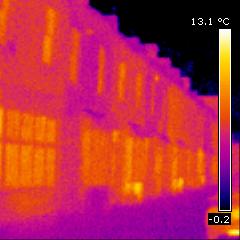
 Thermal images of Victorian cottages
Know the Enemy
Gas and electricity usage are the main factors in domestic carbon emissions and we have done a range of things to reduce our consumption - tarting with simple energy saving measures and behaviour changes to more expensive insulation and microgeneration measures.
We began by calculating our energy consumption for the year before we started to make major changes. We record gas and electricity meter readings each Monday but most people find it easier to get a year's consumption from energy bills (as long as it's actual rather than estimated readings). It's important to use a complete year as most energy use is highly seasonal.
Knowing our annual gas and electricity consumption provided the basis for trying to reduce it. We found that there's nothing like seeing improving results to encourage us to greater effort. (some of our results)
Saving electricity
1. Lighting- Switching to energy efficient lighting can significantly reduce energy consumption. We first changed to compact fluorescent lamps CFL) which are fairly cheap now and last longer than the old incandescent bulbs. The early ones were dim and slow to come on and this has put a lot of people off energy saving bulbs. This is unfortunate as the modern ones are much better. We've now switched to the even better and more energy efficient Light Emitting Diode (LED) bulbs. They are still pricey but prices are coming down and the range of bulbs available is increasing. We think one of the best energy savings around is to switch from halogen spotlights to LED spots. Many modern kitchens have 10 or more spotlights on for long periods. Many are 50 watts and even the "energy saving" halogen spotlights seem to be 35 watts, whereas LED spotlights may be as little as 5 watts.
2. Energy monitoring - We used a Plug-In Mains Power & Energy Monitor to examine how much mains power our gadgets and household appliances used. By plugging each gadget and appliance in turn into the monitor (which in turn plugged into the mains socket) we measured the power drawn by it. For something like the fridge which is only on intermittently, leaving it plugged in to the monitor for a day or so gave us an idea of averge power consumption. We discovered that an electrically heated towel rail was using 30% of our annual electricity use.
We also checked the stand-by consumption of appliances. Sometimes this turned out to be negligible (<1 W) but older appliances (e.g. an old TV or old Hi-Fi) drew 30W or more.
3. Cooking and laundry - We reckon to save a fair bit of electricity by careful cooking and laundry practices (more details elsewhere).
4. Solar pv - We have a substantial area of (approximately) south facing roof so, by installing photovoltaic panels on the roof, we can, over the year, generate more electricity than we use. Our original panels, installed in 2005 were partly grant funded under the now long closed Low Carbon Buildings Programme. We did not, therefore qualify for the Feed-in-Tariff for the 2005 installed panels.
We were so pleased with them that we had more panels installed in 2013.
Saving gas
1. Room heating - We reduced our gas consumption considerably when we had an efficient condensing boiler installed. We now set the timer so that it switches off about 30 minutes or an hour before bedtime. We've also gradually acclimatised to having the thermostat a degree or so lower. With less draughts, the house doesn't have the old chilly feel so we are comfortable at a lower temperature than of old. We also now have theremostatic radiator valves (TRVs) on all but one of our radiators so we can turn them off or have a lower temperature in less used rooms. Above all though, improved insulation has noticeably reduced our energy consumption as the boiler has to work less hard to keep the rooms warm.
2. Water heating - We miss having a combi boiler (not available with our solar water panels) but we are careful with our water heating timer and are pretty good at only heating as much hot water as we need. We have met people who have their water heating turned on all the time!!
Eliminating Gas
1. Solar Water Heating - Solar power can be used to heat water in a tank, to use around the house, so reducing the gas heating requirement. Where we live there is enough sunshine to keep usin hot water through most of the summer, from April to October.So gas is still required to heat the water through the winter.
2. Air Source Heat Pump - Finally, in 2019, we took the ultimate step of replacing our old gas boiler with an entirely electric form of home heating, the air source heat pump. This item sits in the back garden and works like an air conditioner in reverse, extracting heat even from cold outside air then exhanging the heat with the liquid which is then pumped around the radiators inside the house.
Further information:







 Llyn Cau on Cadair Idris
 Cloud waves